python
42 lines · 1 tab
Priya Sharma
Jan 2026
1 tab
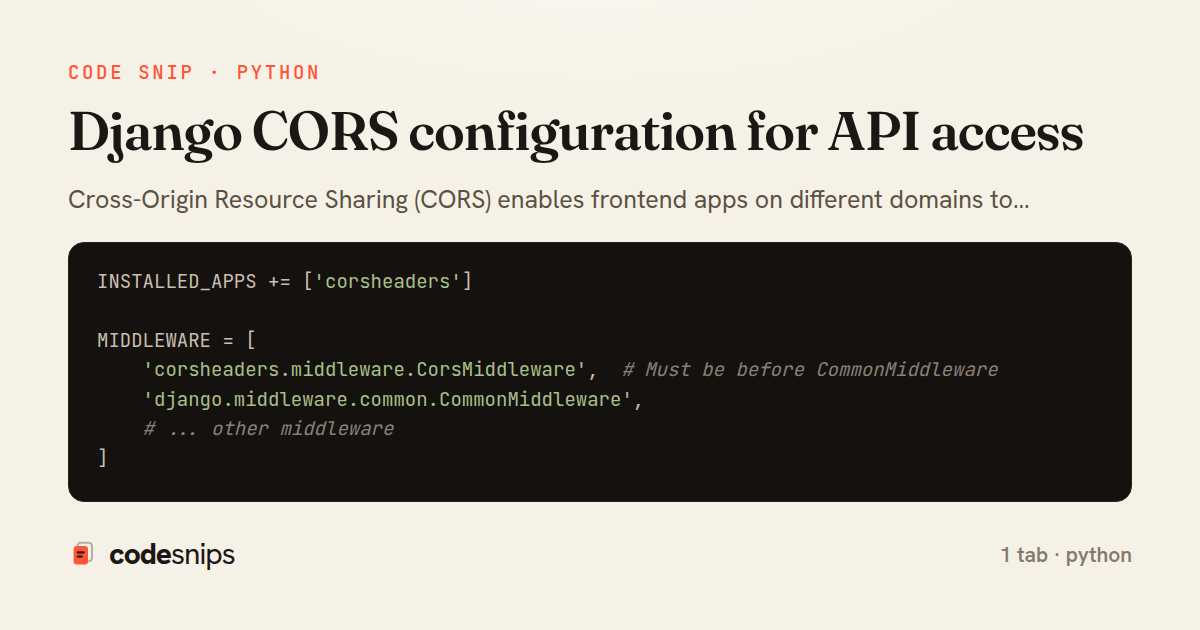
INSTALLED_APPS += ['corsheaders']

MIDDLEWARE = [
    'corsheaders.middleware.CorsMiddleware',  # Must be before CommonMiddleware
    'django.middleware.common.CommonMiddleware',
    # ... other middleware
]

# Production CORS settings
CORS_ALLOWED_ORIGINS = [
    'https://example.com',
    'https://app.example.com',
]

# Allow credentials (cookies, authorization headers)
CORS_ALLOW_CREDENTIALS = True

# Allowed methods
CORS_ALLOW_METHODS = [
    'DELETE',
    'GET',
    'OPTIONS',
    'PATCH',
    'POST',
    'PUT',
]

# Custom headers
CORS_ALLOW_HEADERS = [
    'accept',
    'accept-encoding',
    'authorization',
    'content-type',
    'dnt',
    'origin',
    'user-agent',
    'x-csrftoken',
    'x-requested-with',
]

# Preflight cache (in seconds)
CORS_PREFLIGHT_MAX_AGE = 86400
1 file · python
Explain with highlit
Cross-Origin Resource Sharing (CORS) enables frontend apps on different domains to access your API. I use django-cors-headers for production-ready CORS handling. I configure CORS_ALLOWED_ORIGINS for specific domains in production and use CORS_ALLOW_ALL_ORIGINS only in development. For credentialed requests (cookies, auth headers), I set CORS_ALLOW_CREDENTIALS=True. I whitelist specific HTTP methods and headers as needed. Preflight caching with CORS_PREFLIGHT_MAX_AGE reduces overhead. This is essential for SPAs and mobile apps consuming Django APIs.
Related snips
ruby
payload = {
  sub: user.id,
  iss: 'https://auth.example.com',
  aud: 'codesnips-api',
  exp: 15.minutes.from_now.to_i,
  iat: Time.now.to_i,
JWT issuance and verification without common footguns
jwt
authentication
api
by Kai Nakamura
2 tabs
python
import os
import stat

for root, _dirs, files in os.walk('/etc'):
    for name in files:
        path = os.path.join(root, name)
Python security audit script for exposed risky filesystem state
python
auditing
host-security
by Kai Nakamura
1 tab
ruby
module Api
  module V1
    class UsersController < BaseController
      def show
        user = User.includes(:profile).find(params[:id])
ETags for conditional requests and caching
rails
caching
http-caching
by Alex Kumar
1 tab
python
class Product(models.Model):
    name = models.CharField(max_length=200)
    slug = models.SlugField(blank=True)
    price = models.DecimalField(max_digits=10, decimal_places=2)
    cost = models.DecimalField(max_digits=10, decimal_places=2)
    margin = models.DecimalField(max_digits=5, decimal_places=2, blank=True)
Django model signals vs overriding save
django
python
models
by Priya Sharma
2 tabs
graphql
type User {
    id: ID!
    name: String!
    email: String!
    posts: [Post!]!
    createdAt: String!
GraphQL API with Spring Boot
java
graphql
spring-boot
by David Kumar
3 tabs
python
from django.urls import path
from . import views

app_name = 'blog'

urlpatterns = [
Django URL namespacing and reverse lookups
django
python
urls
by Priya Sharma
3 tabs
Share this code
Here's the card — post it anywhere.