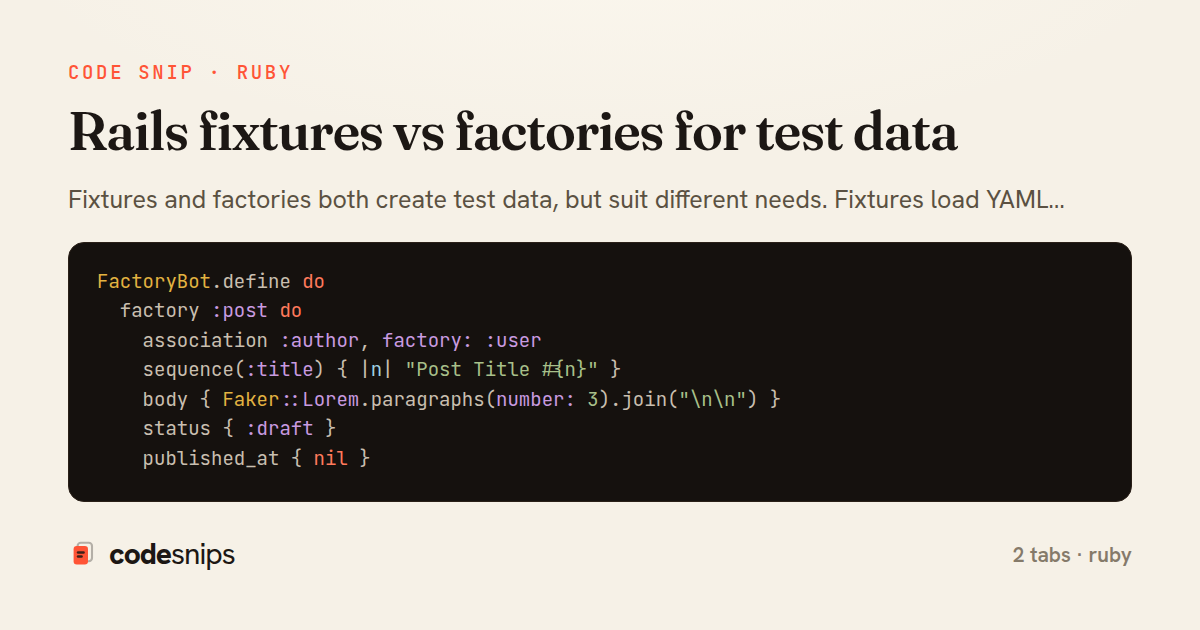
FactoryBot.define do
  factory :post do
    association :author, factory: :user
    sequence(:title) { |n| "Post Title #{n}" }
    body { Faker::Lorem.paragraphs(number: 3).join("\n\n") }
    status { :draft }
    published_at { nil }

    trait :published do
      status { :published }
      published_at { 1.day.ago }
    end

    trait :with_comments do
      after(:create) do |post|
        create_list(:comment, 3, post: post)
      end
    end

    trait :with_tags do
      after(:create) do |post|
        post.tag_list.add('rails', 'ruby', 'testing')
        post.save
      end
    end
  end
end
require 'test_helper'

class PostTest < ActiveSupport::TestCase
  test 'published scope returns only published posts' do
    published = create(:post, :published)
    draft = create(:post)

    assert_includes Post.published, published
    refute_includes Post.published, draft
  end

  test 'validates title presence' do
    post = build(:post, title: nil)
    refute post.valid?
    assert_includes post.errors[:title], "can't be blank"
  end

  test 'can have multiple comments' do
    post = create(:post, :with_comments)
    assert_equal 3, post.comments.count
  end
end
Fixtures and factories both create test data, but suit different needs. Fixtures load YAML files into the database before tests, providing fast, consistent data. I use fixtures for static reference data like countries or categories. Factories (via FactoryBot) build objects programmatically with attributes and associations. They're more flexible for test-specific scenarios and maintain referential integrity automatically. Factories support traits for variations and sequences for unique values. I prefer factories for most tests since they're more maintainable and explicit. Fixtures excel for large, static datasets. The key is consistency—mixing both approaches causes confusion. For React integration tests, I mock API responses with MSW instead of seeding data.
Related snips
class CommentsController < ApplicationController
  before_action :set_post

  def create
    @comment = @post.comments.build(comment_params)
System test: asserting Turbo Stream responses
class Post < ApplicationRecord
  belongs_to :author, class_name: 'User'
  has_many :comments, dependent: :destroy

  scope :published, -> { where.not(published_at: nil).where('published_at <= ?', Time.current) }
  scope :draft, -> { where(published_at: nil) }
ActiveRecord scopes for reusable query logic
module Api
  module V1
    class UsersController < BaseController
      def show
        user = User.includes(:profile).find(params[:id])
ETags for conditional requests and caching
class PostsController < ApplicationController
  def index
    @posts = Post.includes(:author)
                 .order(created_at: :desc)
                 .page(params[:page])
                 .per(10)
Turbo Frames: infinite scroll with lazy-loading frame
require "csv"

class PeopleCsvStream
  include Enumerable

  HEADERS = %w[id full_name email signed_up_at plan].freeze
Resilient CSV Export as a Streamed Response
<form data-controller="query-sync" data-action="change->query-sync#apply">
  <select name="status" class="rounded border p-2">
    <option value="">Any</option>
    <option value="open">Open</option>
    <option value="closed">Closed</option>
  </select>
Filter UI that syncs query params via Stimulus (no front-end router)
Share this code
Here's the card — post it anywhere.