ruby
67 lines · 3 tabs
Maya Patel
Jan 2026
3 tabs
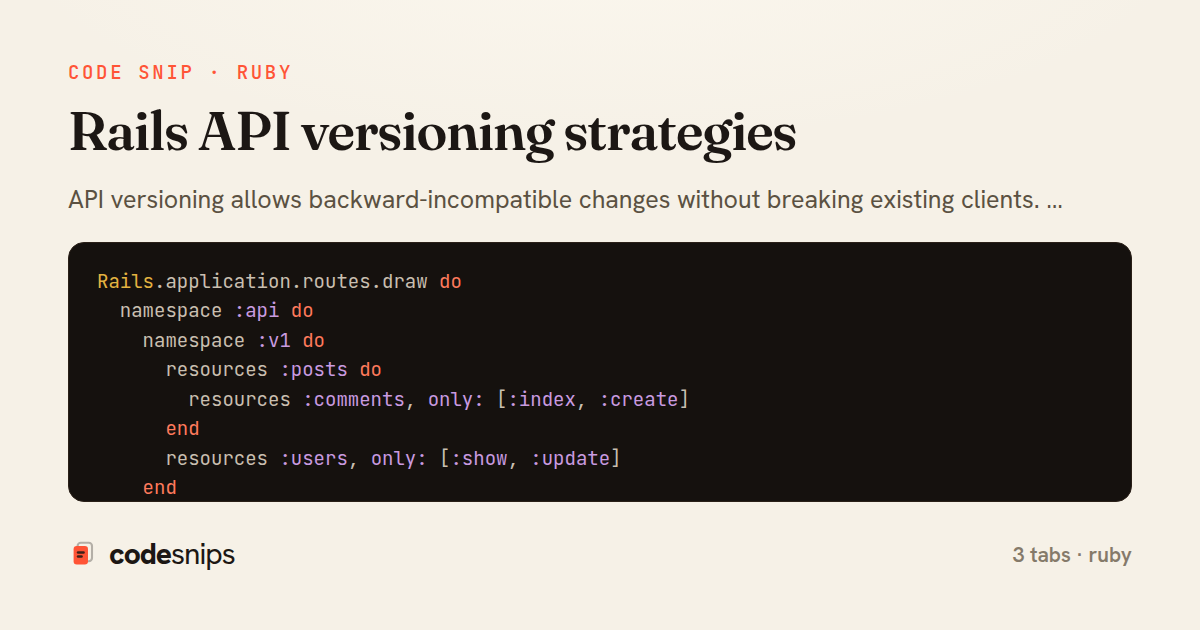
Rails.application.routes.draw do
  namespace :api do
    namespace :v1 do
      resources :posts do
        resources :comments, only: [:index, :create]
      end
      resources :users, only: [:show, :update]
    end

    namespace :v2 do
      resources :posts do
        resources :comments
        member do
          post :publish
          post :archive
        end
      end
      resources :users
      resources :profiles
    end

    # Default to latest version
    root to: redirect('/api/v2')
  end
end
module Api
  module V1
    class PostsController < ApplicationController
      def index
        posts = Post.published.includes(:author).page(params[:page])

        # Add deprecation warning
        response.headers['X-API-Deprecation'] = 'This API version is deprecated. Please migrate to /api/v2'
        response.headers['X-API-Sunset'] = '2024-12-31'

        render json: posts, each_serializer: V1::PostSerializer
      end
    end
  end
end
module Api
  module V2
    class PostSerializer < ActiveModel::Serializer
      attributes :id, :title, :content, :excerpt, :status,
                 :published_at, :created_at, :updated_at,
                 :metadata

      belongs_to :author, serializer: V2::UserSerializer
      has_many :tags

      # V2 includes additional computed fields
      def metadata
        {
          word_count: object.body.split.size,
          read_time: (object.body.split.size / 200.0).ceil,
          featured: object.featured?,
          trending: object.trending_score > 10
        }
      end

      # V2 uses different field name
      def content
        object.body
      end
    end
  end
end
3 files · ruby
Explain with highlit
API versioning allows backward-incompatible changes without breaking existing clients. I version via URL path (/api/v1/posts) for simplicity and explicit version selection. Each version namespace has its own controllers and serializers. Routes use namespace blocks to organize versions. When creating v2, I duplicate v1 controllers and modify only what changes, sharing models between versions. For minor changes, I use optional params or conditional logic within a version. Deprecation headers warn clients about sunset timelines. I maintain at least two versions simultaneously during transitions. This strategy balances stability for existing clients with evolution for new features.
Related snips
ruby
class CommentsController < ApplicationController
  before_action :set_post

  def create
    @comment = @post.comments.build(comment_params)
System test: asserting Turbo Stream responses
rails
hotwire
turbo
by codesnips
4 tabs
ruby
class Post < ApplicationRecord
  belongs_to :author, class_name: 'User'
  has_many :comments, dependent: :destroy

  scope :published, -> { where.not(published_at: nil).where('published_at <= ?', Time.current) }
  scope :draft, -> { where(published_at: nil) }
ActiveRecord scopes for reusable query logic
rails
activerecord
patterns
by Alex Kumar
1 tab
ruby
payload = {
  sub: user.id,
  iss: 'https://auth.example.com',
  aud: 'codesnips-api',
  exp: 15.minutes.from_now.to_i,
  iat: Time.now.to_i,
JWT issuance and verification without common footguns
jwt
authentication
api
by Kai Nakamura
2 tabs
ruby
module Api
  module V1
    class UsersController < BaseController
      def show
        user = User.includes(:profile).find(params[:id])
ETags for conditional requests and caching
rails
caching
http-caching
by Alex Kumar
1 tab
ruby
class PostsController < ApplicationController
  def index
    @posts = Post.includes(:author)
                 .order(created_at: :desc)
                 .page(params[:page])
                 .per(10)
Turbo Frames: infinite scroll with lazy-loading frame
rails
turbo
hotwire
by codesnips
4 tabs
ruby
require "csv"

class PeopleCsvStream
  include Enumerable

  HEADERS = %w[id full_name email signed_up_at plan].freeze
Resilient CSV Export as a Streamed Response
rails
performance
streaming
by codesnips
3 tabs
Share this code
Here's the card — post it anywhere.