javascript
12 lines · 1 tab
Kai Nakamura
Apr 2026
1 tab
import { sha256 } from './crypto.js';

const codeVerifier = crypto.randomUUID() + crypto.randomUUID();
sessionStorage.setItem('pkce_verifier', codeVerifier);

const digest = await sha256(codeVerifier);
const codeChallenge = btoa(String.fromCharCode(...new Uint8Array(digest)))
  .replace(/\+/g, '-')
  .replace(/\//g, '_')
  .replace(/=+$/, '');

location.href = `https://auth.example.com/oauth/authorize?response_type=code&client_id=spa-client&code_challenge_method=S256&code_challenge=${codeChallenge}`;
1 file · javascript
Explain with highlit
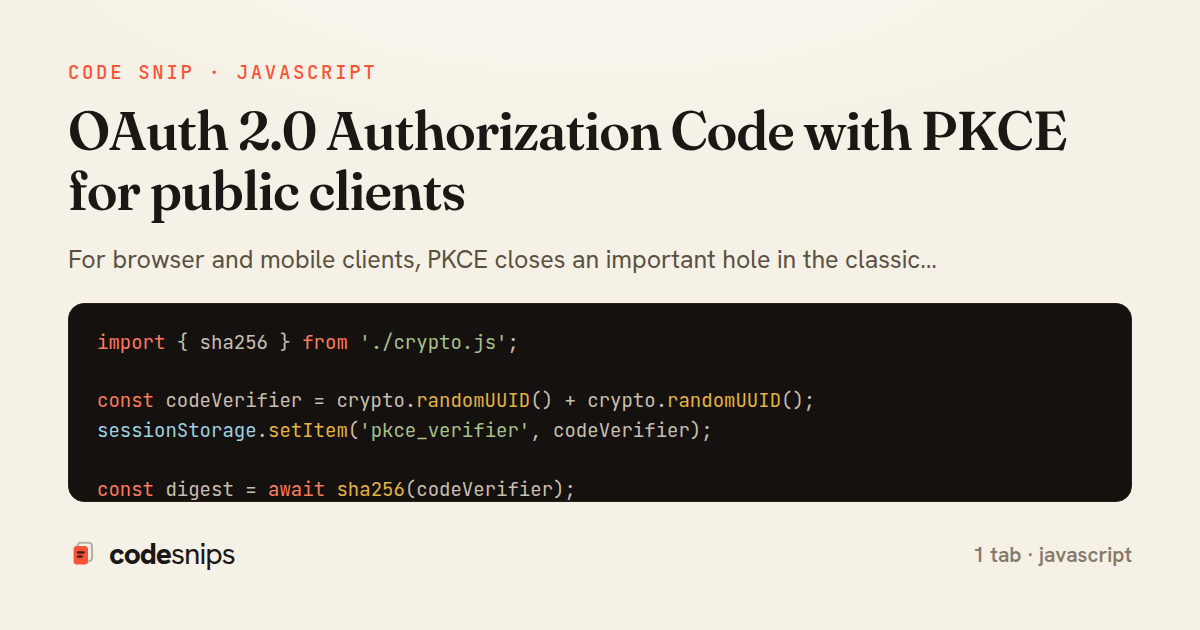
For browser and mobile clients, PKCE closes an important hole in the classic authorization code flow. I use it by default with public clients, require exact redirect URI matching, and keep token exchange on TLS only. This is one of those cases where the secure default should also be the ergonomic default.
Related snips
ruby
payload = {
  sub: user.id,
  iss: 'https://auth.example.com',
  aud: 'codesnips-api',
  exp: 15.minutes.from_now.to_i,
  iat: Time.now.to_i,
JWT issuance and verification without common footguns
jwt
authentication
api
by Kai Nakamura
2 tabs
typescript
import { randomBytes, createHash } from "crypto";
import jwt from "jsonwebtoken";
import { RefreshTokenStore } from "./store";

const ACCESS_SECRET = process.env.ACCESS_SECRET!;
const ACCESS_TTL = "15m";
JWT access + refresh token rotation (conceptual)
security
node
jwt
by codesnips
3 tabs
ruby
raw_token = SecureRandom.urlsafe_base64(32)
token_digest = Digest::SHA256.hexdigest(raw_token)

PasswordReset.create!(
  user: user,
  token_digest: token_digest,
Secure random token generation for sessions and recovery flows
randomness
tokens
authentication
by Kai Nakamura
1 tab
plaintext
Protocol 2
PermitRootLogin no
PasswordAuthentication no
KbdInteractiveAuthentication no
PubkeyAuthentication yes
AllowUsers deploy ops
SSH daemon hardening and key based access only
ssh
linux
hardening
by Kai Nakamura
1 tab
python
INSTALLED_APPS += [
    'django.contrib.sites',
    'allauth',
    'allauth.account',
    'allauth.socialaccount',
    'allauth.socialaccount.providers.google',
Django allauth for social authentication
django
python
authentication
by Priya Sharma
2 tabs
python
from django.contrib.auth.models import AbstractUser
from django.db import models


class CustomUser(AbstractUser):
    """Extended user model with additional fields."""
Django custom user model best practices
django
python
models
by Priya Sharma
2 tabs
Share this code
Here's the card — post it anywhere.